CN >
CN >
What Is Residual Stress in Thermal Silicone Pads? Why Does It Affect the Long-Term Reliability of Electronic Products?
Author:NFION
Date:2026-07-29 15:56:05
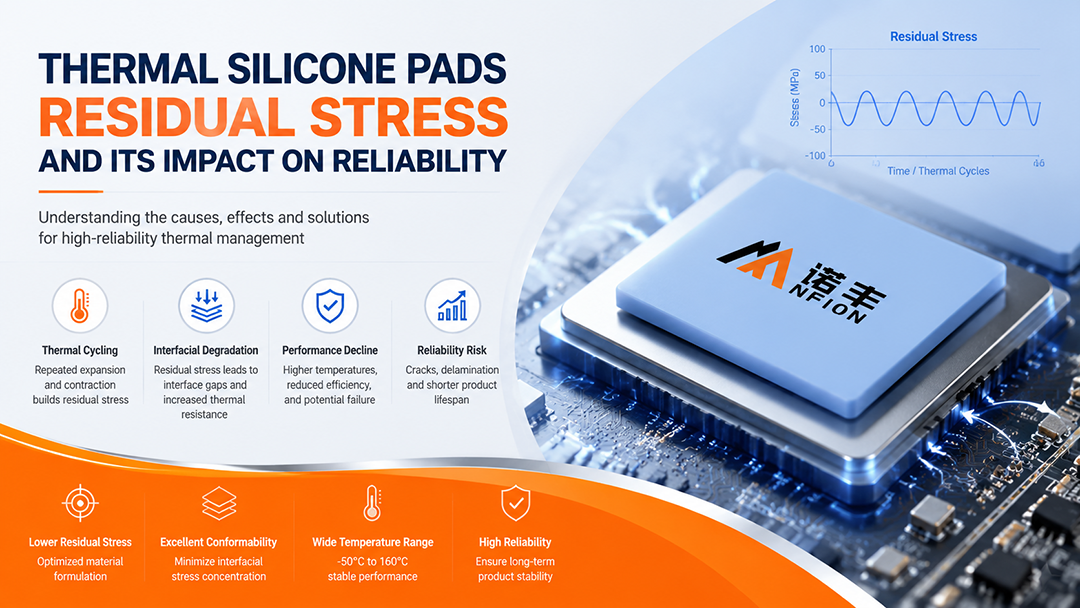
From Material Mechanical Performance to Thermal Interface Stability: Understanding the Key Factors Behind Long-Term Reliability of Thermal Pads
With the continuous development of electronic products toward higher power density, greater integration, and smaller form factors, thermal management has become a critical factor affecting product performance and reliability.
As electronic components generate increasing amounts of heat, efficient and stable heat dissipation has become essential for ensuring long-term operation.
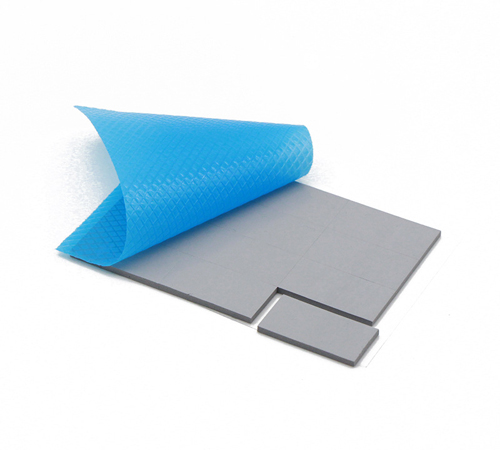
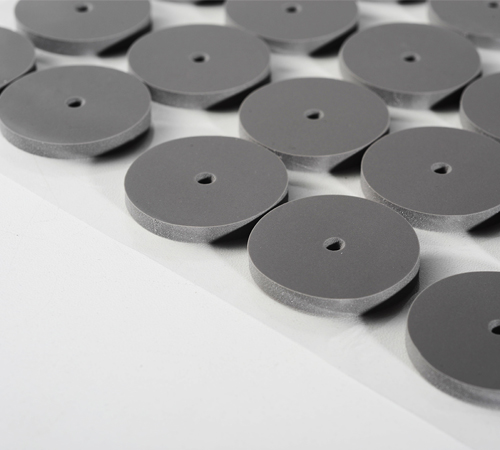
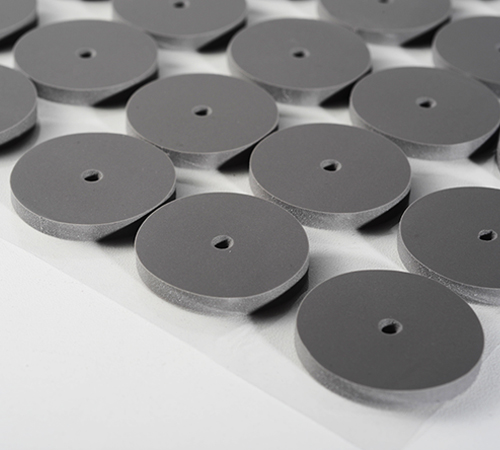
Thermal silicone pads, also known as thermal interface materials (TIMs), are widely used between heat-generating components and heat dissipation structures. By filling microscopic gaps between contact surfaces, thermal silicone pads reduce interface thermal resistance and improve heat transfer efficiency.
However, in practical engineering applications, the reliability of thermal silicone pads is not determined only by thermal conductivity.
Many products perform well during initial testing but may experience:
● Reduced heat dissipation performance;
● Increased chip temperature;
● Decreased interface contact stability;
● Reduced product reliability;
after long-term operation, thermal cycling, or continuous mechanical compression.
One important factor behind these issues is the change of residual stress within thermal silicone pads during long-term use.
Therefore, for applications such as automotive electronics, communication equipment, and industrial control systems, thermal silicone pads must provide not only excellent thermal performance but also stable mechanical properties and long-term reliability.
1. Why Should Residual Stress in Thermal Silicone Pads Be Considered?
In electronic product designs, thermal silicone pads are commonly installed between:
● Chips and heat sinks;
● Power components and metal structures;
● PCBs and external housings.
Due to manufacturing tolerances among electronic components, PCBs, and heat dissipation structures, thermal silicone pads are usually compressed during assembly to achieve close contact.
Proper compression provides:
● Larger effective contact area;
● Reduced air gaps;
● Lower interface thermal resistance.
However, compression also generates mechanical stress inside the material.
If this stress remains stable, the thermal silicone pad can maintain reliable contact between the heat source and the cooling structure for an extended period.
However, if internal stress changes significantly over time, it may lead to:
● Thickness variation;
● Reduced recovery capability;
● Lower contact pressure;
● Decreased heat transfer performance.
Therefore, the reliability of thermal silicone pads depends not only on their initial thermal performance but also on their ability to maintain stable performance under long-term operating conditions.
2. What Is Residual Stress in Thermal Silicone Pads?
2.1 Basic Concept of Residual Stress
Residual stress refers to:
▎ The internal stress state that remains inside a material after external forces, processing conditions, or temperature changes have occurred, even when the external forces are removed.
Simply speaking, when a material experiences compression, stretching, or thermal changes, its internal structure generates a restoring force. This unreleased internal force is known as residual stress.
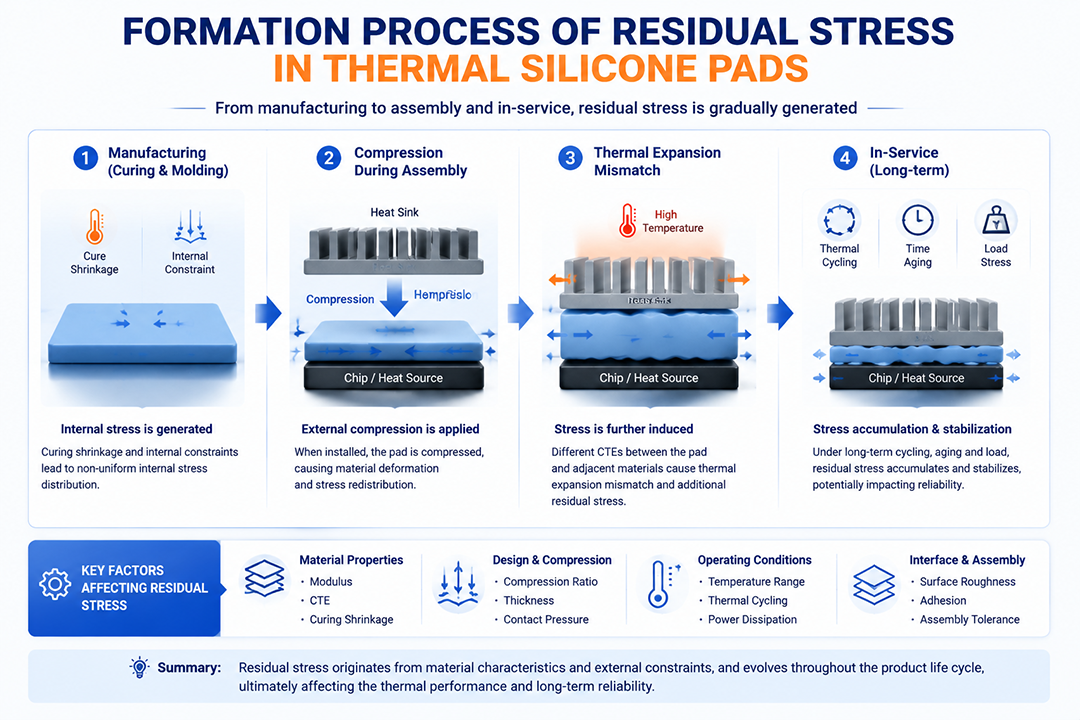
2.2 How Is Residual Stress Generated in Thermal Silicone Pads?
Thermal silicone pads experience multiple stages from manufacturing to practical application.
(1) Initial Stress Generated During Manufacturing
Thermal silicone pads are mainly composed of:
● Silicone polymer matrix;
● Thermally conductive fillers;
● Functional additives.
During mixing, molding, and curing processes:
● Polymer structures change;
● Fillers interact with the silicone matrix;
● Internal stresses may develop.
Some of these stresses may remain inside the material after production.
(2) Mechanical Stress Generated During Assembly Compression
During installation, thermal silicone pads are compressed to ensure proper contact.
For example:
A thermal silicone pad with an original thickness of 2.0 mm may be compressed to 1.8 mm after assembly.
At this point, the material generates elastic recovery force, which helps maintain continuous contact between the heat source and the cooling structure.
If the material has good elastic recovery capability, it can maintain stable contact pressure over a long period.
If the material performance deteriorates under continuous compression, interface pressure may gradually decrease.
(3) Stress Variation Caused by Long-Term Temperature Changes
During operation, electronic products continuously experience:
● Start-up heating;
● High-load operation;
● Cooling after shutdown.
Temperature variations cause different materials to expand and contract differently.
Because:
● Semiconductor packages;
● PCBs;
● Metal heat sinks;
● Thermal silicone pads;
have different coefficients of thermal expansion, repeated temperature cycling causes continuous changes in internal stress.
3. Main Causes of Residual Stress in Thermal Silicone Pads
3.1 Influence of Material Formulation
The mechanical properties of thermal silicone pads are closely related to their material formulation.
Different formulation systems directly affect:
● Hardness;
● Flexibility;
● Compression performance;
● Elastic recovery capability;
● Long-term stability.
If the material is too hard:
Although it may provide strong initial support, it can also generate higher installation stress.
If the material is too soft:
Although it can provide better surface conformity, it may experience greater thickness change after long-term compression.
Therefore, high-reliability thermal silicone pads need to achieve a balance among:
Flexibility, mechanical support, and long-term stability.
3.2 Improper Compression Design
For thermal silicone pads, higher compression does not always mean better performance.
Excessive compression may result in:
● Higher initial installation pressure;
● Increased internal stress;
● Accelerated material fatigue.
On the other hand, insufficient compression may cause:
● Poor interface contact;
● Increased air gaps;
● Higher thermal resistance.
Therefore, during structural design, engineers need to determine an appropriate compression range based on:
● Gap dimensions;
● Assembly method;
● Material properties.
A reasonable compression design can ensure both effective heat transfer and long-term reliability.
3.3 Effects of Thermal Cycling
Long-term temperature variation is one of the important factors affecting the reliability of thermal silicone pads.
For example:
Automotive electronics may experience:
-40°C to 85°C or even wider temperature cycles.
Communication equipment often requires:
● Continuous operation;
● Long-term high-load performance.
Under repeated temperature changes, thermal silicone pads experience:
Expansion → Contraction → Expansion
over and over again.
Long-term cycling may result in:
● Material fatigue;
● Stress relaxation;
● Changes in interface pressure.
3.4 Effects of Long-Term Aging
After long-term operation, thermal silicone pads may experience:
Compression Permanent Deformation
When a material remains under pressure for a long time, it may not fully recover its original thickness.
This may lead to:
● Reduced effective thickness;
● Lower contact pressure.
Stress Relaxation
The internal stress of a material gradually decreases over time.
This may result in:
● Reduced interface retention capability;
● Lower thermal transfer stability.
4. How Does Residual Stress Affect the Long-Term Reliability of Electronic Products?
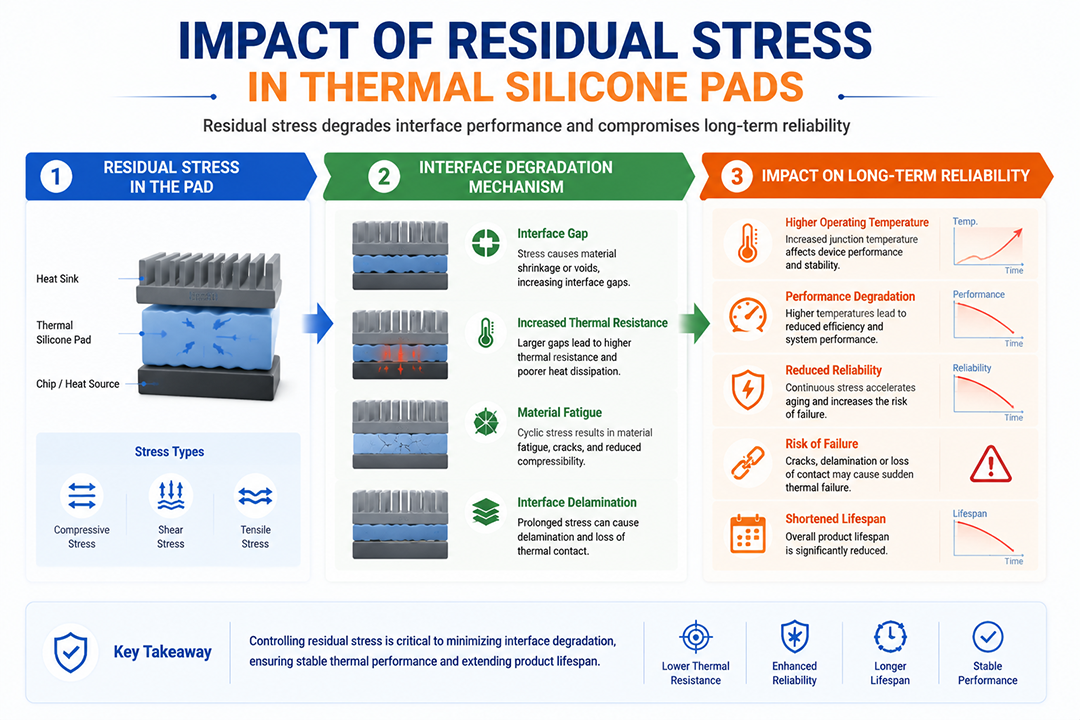
4.1 Reduced Thermal Interface Stability
The primary function of a thermal silicone pad is to establish a stable heat transfer path.
The ideal structure is:
Heat-generating chip
↓
Thermal silicone pad
↓
Heat dissipation structure
When changes in residual stress reduce the recovery capability of the material:
● Contact pressure decreases;
● Interface conformity becomes weaker;
● Air gaps increase.
Since air has much lower thermal conductivity than thermal interface materials, this can lead to:
● Increased interface thermal resistance;
● Reduced heat dissipation efficiency.
4.2 Increased Risk of Chip Temperature Rise
When the thermal transfer path is affected, heat generated by the chip cannot be effectively dissipated.
This may result in:
● Higher operating temperature;
● Increased local hotspots;
● Reduced device performance.
For high-power applications such as:
● Communication processors;
● Power modules;
● Industrial control components;
increased temperature can further affect product lifetime.
4.3 Impact on Electronic Structure Reliability
Changes in residual stress affect not only thermal performance but also mechanical reliability.
Long-term uneven stress may affect:
● PCBs;
● Semiconductor packages;
● Solder joints.
Especially under thermal cycling conditions, differences in thermal expansion between materials may increase the risk of:
● Micro-cracks;
● Connection fatigue;
● Reduced structural reliability.
5. How to Test and Evaluate the Long-Term Reliability of Thermal Silicone Pads?
During thermal silicone pad selection, engineers should not focus only on thermal conductivity.
For long-term reliability applications, the following performance indicators should also be considered:
| Test Item | Purpose |
| Thermal conductivity | Evaluate heat transfer capability |
| Thermal resistance | Evaluate actual interface heat transfer performance |
| Compression stress | Evaluate installation pressure |
| Compression permanent deformation | Evaluate long-term thickness retention |
| Stress relaxation test | Evaluate pressure reduction over time |
| Elastic recovery performance | Evaluate long-term interface contact capability |
| Thermal cycling test | Evaluate environmental durability |
| Thermal aging test | Evaluate long-term performance changes |
Among these factors:
Compression permanent deformation, stress relaxation, and thermal cycling performance are critical indicators for evaluating the long-term reliability of thermal silicone pads.
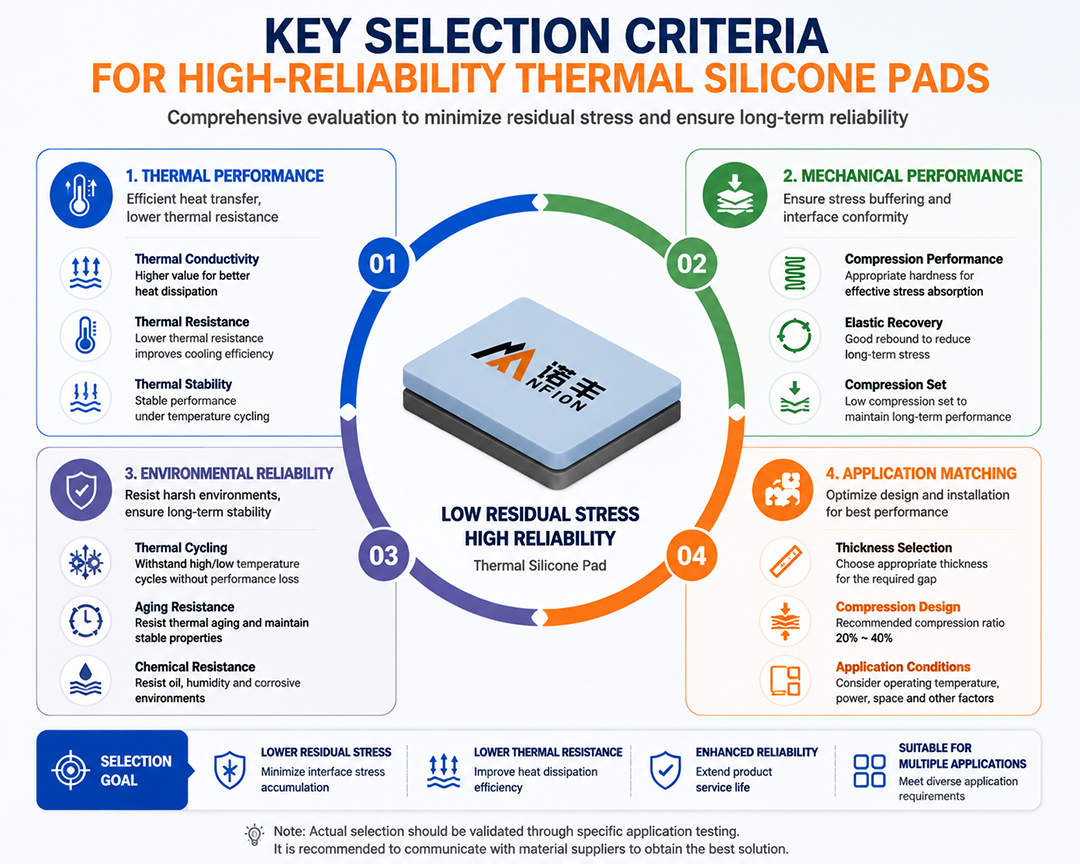
6. How to Select Low-Residual-Stress and High-Reliability Thermal Silicone Pads?
6.1 Do Not Focus Only on Thermal Conductivity
Thermal conductivity determines the heat transfer capability of a material.
However, for long-term applications, mechanical stability is equally important.
Engineers should consider:
● Hardness;
● Compression performance;
● Elastic recovery;
● Long-term deformation characteristics.
A thermal silicone pad with excellent reliability should maintain both:
● Efficient heat transfer;
● Stable mechanical contact.
6.2 Select Materials According to Application Environment
Different applications have different reliability requirements.
Consumer Electronics
Key considerations:
● Thin design;
● Limited assembly space;
● Cost control.
Communication Equipment
Key considerations:
● Continuous operation;
● Stable heat dissipation;
● Long service life.
Automotive Electronics
Key considerations:
● Thermal cycling;
● Vibration conditions;
● Long-term reliability.
Therefore, thermal material selection should be based on the actual operating environment rather than comparing only a single parameter.
6.3 Importance of Supplier Reliability Verification Capability
High-reliability thermal materials should not only provide basic technical parameters but also require:
● Complete testing data;
● Reliability verification;
● Application experience.
By matching material performance with application requirements, companies can reduce potential failure risks during long-term operation.
Conclusion: Thermal Silicone Pads Need Both High Thermal Performance and Long-Term Stability
With the continuous increase in power density of electronic devices, thermal silicone pads have evolved from simple auxiliary materials into key components that influence product reliability.
Although residual stress cannot be completely eliminated, its impact can be effectively reduced through:
● Proper compression design;
● Optimized material selection;
● Reliability testing and verification.
For high-reliability electronic products, an excellent thermal silicone pad should not only perform well during initial testing but also maintain stable thermal interface performance throughout long-term operation.
A truly reliable thermal management solution is not only about reducing temperature, but also about ensuring the long-term stable operation of electronic products.